
Appreciation re Awareness session to break silence around CSA
Appreciation re Awareness session to break silence around CSA
Aid to Migrant Workers in Bihar by Samvet Bhagalpur and PEC in Collaboration Aid India
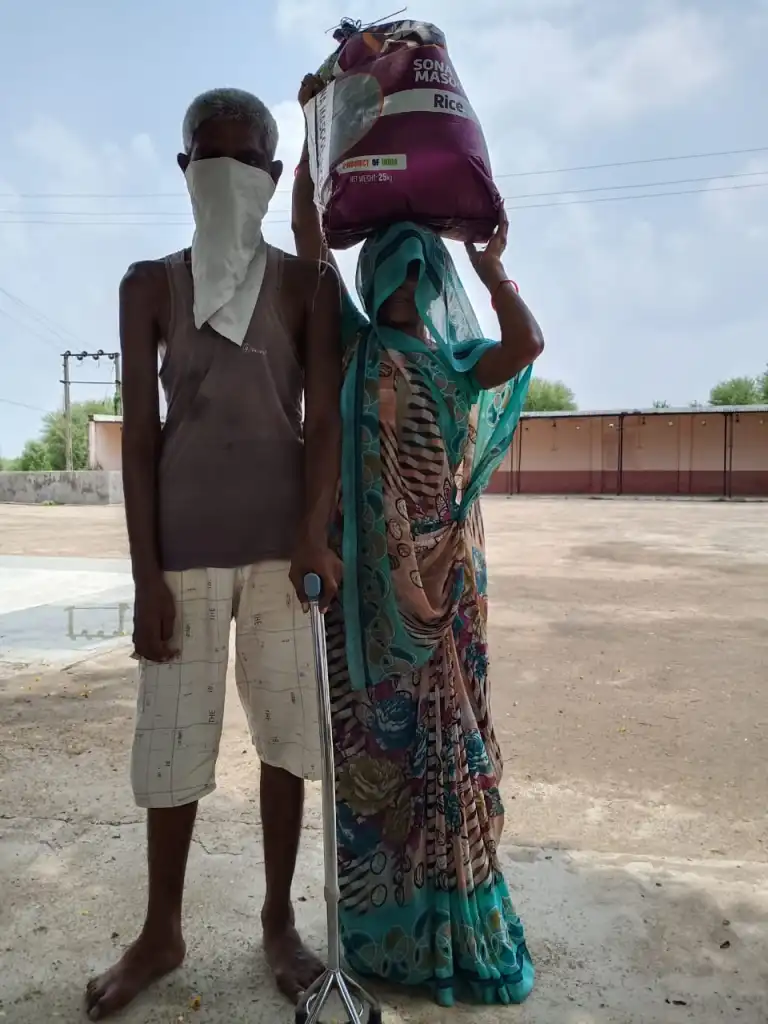
Aid to Migrant Workers in Bihar by Samvet Bhagalpur and PEC in Collaboration Aid India Samvet Bhagalpur and PEC in collaboration with Aid India, provided 400 food kits to migrant workers who had to return to their native place(s) because of the lockdown. This distribution took place in rural and urban areas. Urmila Devi has 3 sons. Her husband passed away three years ago. Her sons do not give her food to eat due to which she is always ill. The food she receives from her Ration Card is taken by her sons. She eats food by asking from people. Chaudhary Tola is the village of fishermen and people earn their livelihood by selling fish. The rate of vaccine distribution in the village is approximately 25%. The rate is low due to rumors, but government and social organizations are trying to spread awareness and urge people to take the vaccine. She was very happy to receive the Ration Kit provided by the NGO and thanked the worker. Urmila Devi, 75 years old
First Consultation to establish Bal Sahay Kendra in Gujarat
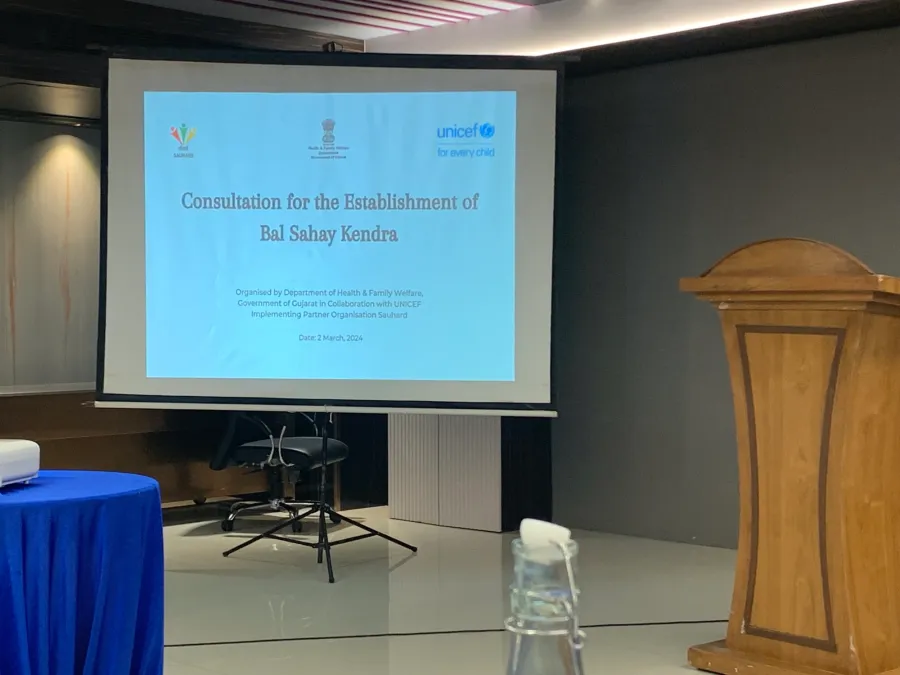
First Consultation to establish Bal Sahay Kendra in Gujarat First baby steps towards establishment of equivalent of one stop centres for child survivors of violence … Immense number of things to think through – to be based in Hospital – provision of medico legal support, temporary accommodation- congratulations to those who have the courage to dream and act … very humbling to hear from mental health professionals , peadtricians , gynaecologists , acedemics and ofcourse unicef experts and ofcourse Enfold leading the way…For me , an opportunity to share the experience of Peace and Equality cell’s journey to support child survivors of CSA in 4 districts of Gujarat…Excellent suggestions from various panellists included the idea of integrated trainings with multiple stakeholders repeatedly , fixing responsibility and accountability, monthly reviews , investing in training, supervision and support of staff
Discussion on Gender Budget
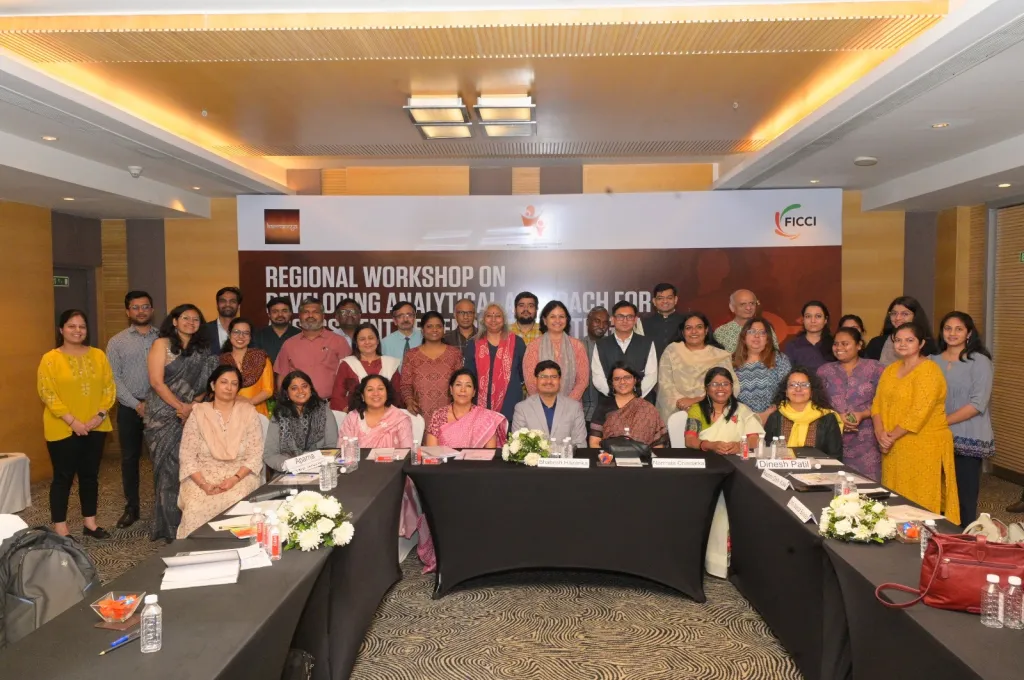
Discussion on Gender Budget Really interesting, open and honest discussion with some of the NGOs and academics yesterday- very important insights shared – one I liked particularly was an admission that presently we have little data about gender outcomes as a result of gender budgeting … also clearly focus on numbers / how much money is being spent rather than how it is being used and an excellent suggestion that we should think about changing the name to Gender impact budget …. to change the focus.
Field visit Bihar – meeting the brave activists, advocates and most importantly survivors of CSA who are breaking the culture of silence and seeking justice
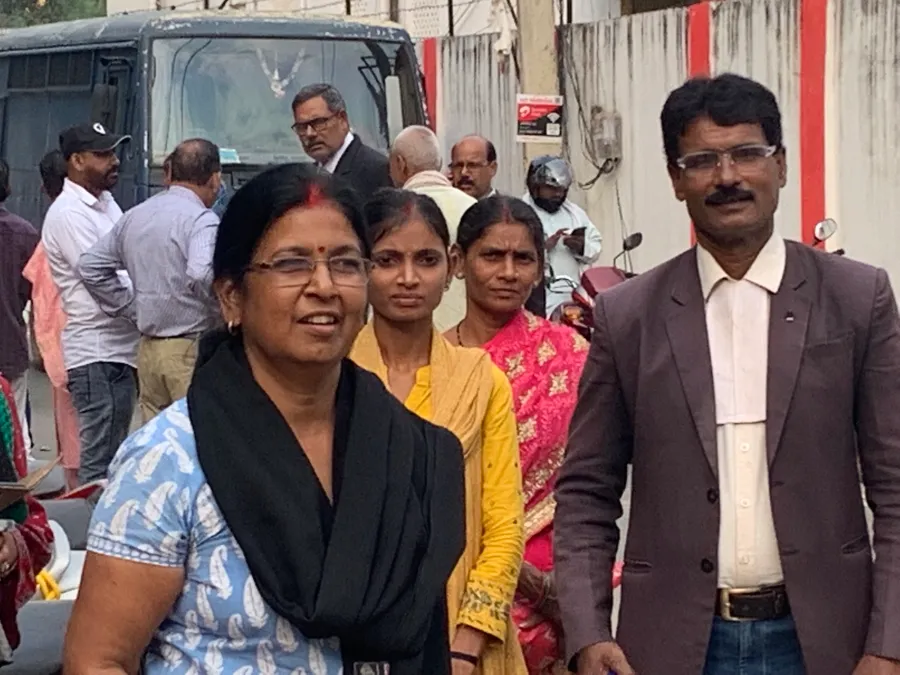
Field visit Bihar – meeting the brave activists, advocates and most importantly survivors of CSA who are breaking the culture of silence and seeking justice
Meeting complainant in new CSA case
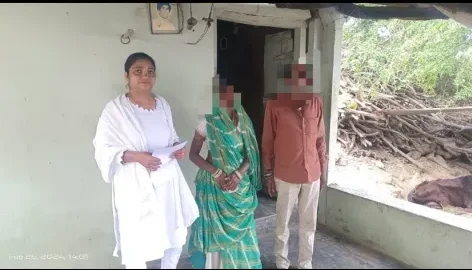
Meeting complainant in new CSA case Advocate Shabana Mansuri makes routine contact with survivors’ parents who want to go to the court battle to secure justice for their child survivor of CSA.
Raising awareness of adolescent sexuality , posh and greyness of consent
Raising awareness of adolescent sexuality , posh and greyness of consent
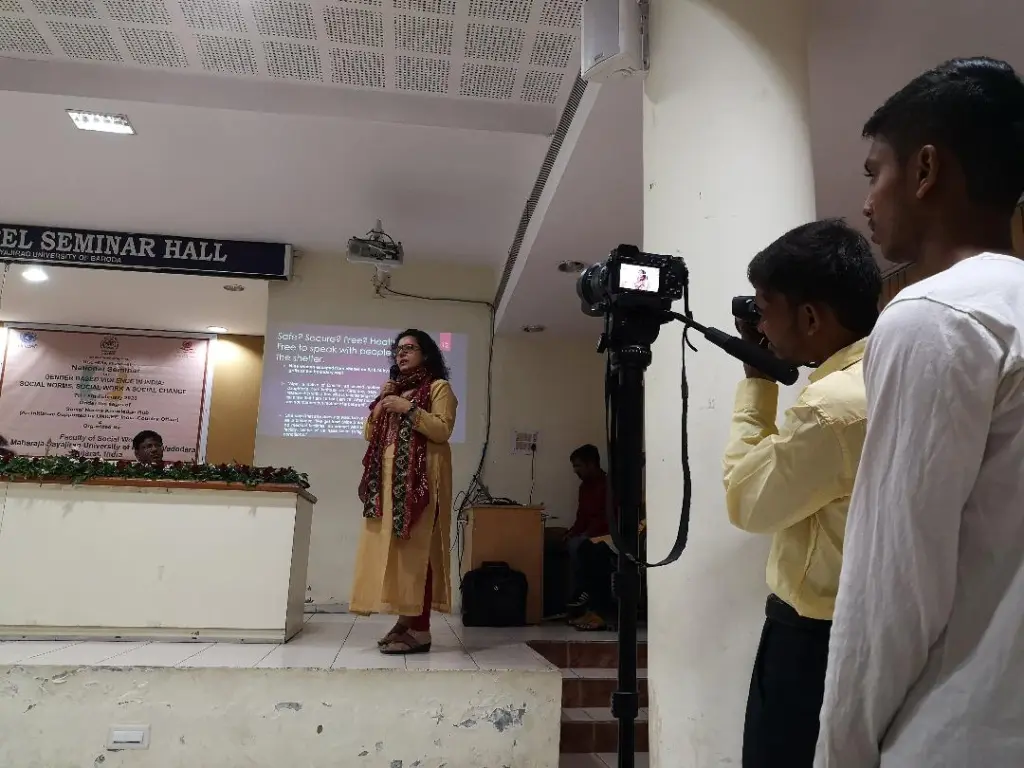
National Seminar on Gender-Based Violence in India: Social Norms, Social Work & Social Change
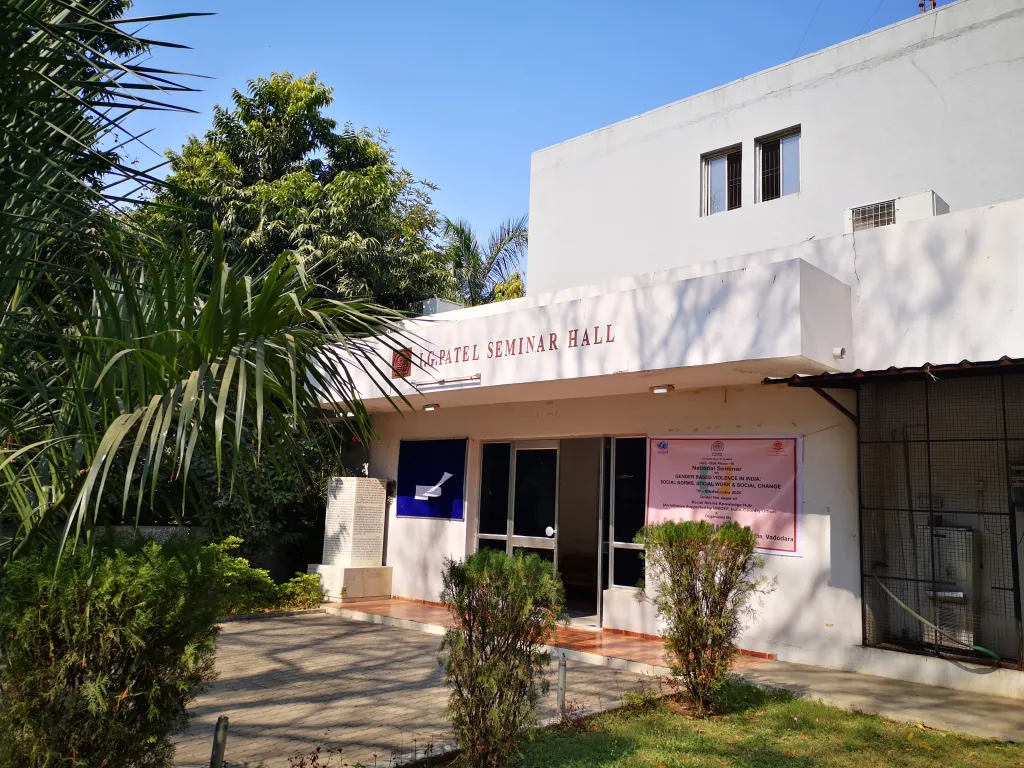
National Seminar on Gender-Based Violence in India: Social Norms, Social Work & Social Change Prita Jha was invited to the plenary discussion with a host of panelists, including Professors in Social Work; Bhavna Mehta, Dinesh Kapadia and Dr Sanjay on the topic of challenging Social Norms in our society and how to bring about social change. The main theme of the conference was to address and discuss solutions to the epidemic of Gender-Based Violence in Gujarat. This panel discussion was held on 8th February (the second day of the 2 day seminar), at the renowned Faculty of Social Work at the Maharaja Sayajirao University of Baroda (MSU), under the aegis of the Social Norms Knowledge Hub (SNKH), with the support of Unicef India. The audience was made up of University students, teachers and professors from within the Social Work Faculty, to hear panelists explore ways in which social norms should be challenged, including dated ideals and conditioning which is engrained within all levels of society. The audience were able to ask questions to the panelists in order to aid their own understanding of how integral societal involvement is in bringing about lasting change. It was encouraging to hear progressive research papers delivered by students, illustrating the importance of continued research in these areas.
Background and History of Women Shelters
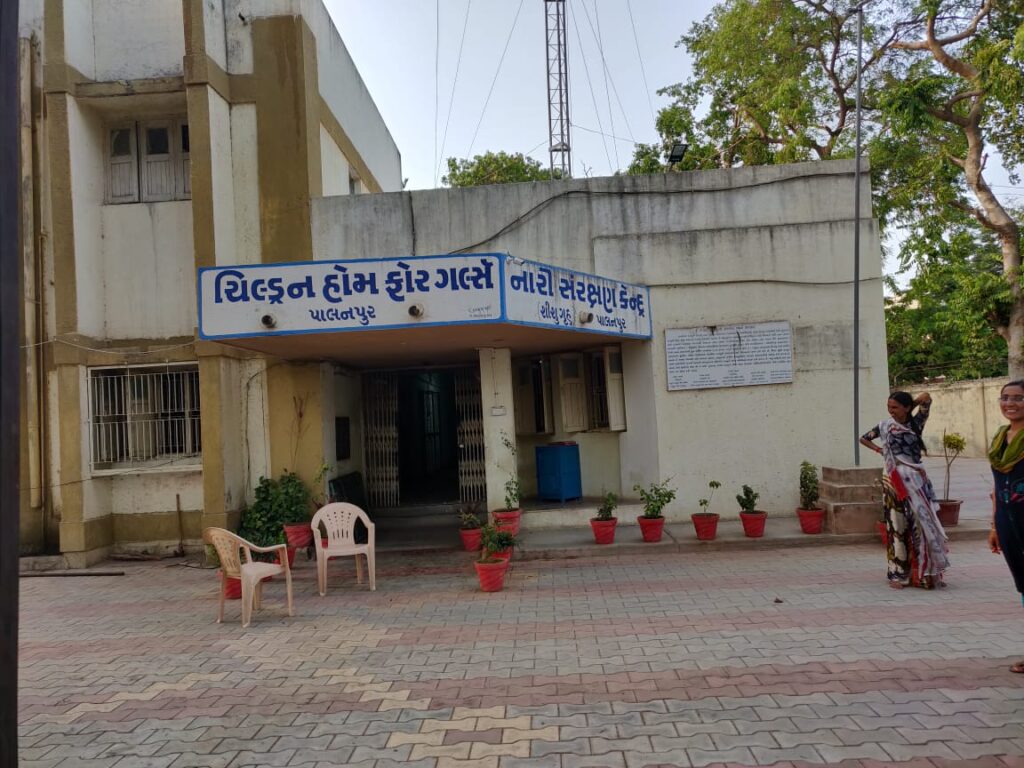
Background and History of Women Shelters In September 2014, the newspapers (particularly Indian Express) were covered in pictures of the deplorable state of the Odhav Nari Gruh shelter. A journalist from Indian Express had managed to get into the shelter and taken photographs of the unhygienic conditions of the shelter where basically women were defecating in the rooms and nobody was cleaning it up and very difficult for women to exist in that environment. She also spoke to the residents and they said that they were doing all the cleaning if anybody was doing it. This was the context in which the women had escaped the shelter and they had broken the windows of the shelter to get out. There was an attempt to ask the court to take suo moto notice of the status of the state of shelter but the court declined to act on media report in this instance. It was then that Peace and Equality Cell(PEC) in collaboration with other individuals (Trupti Shah and Afroz Zahan) filed a PIL in Gujarat High Court. The evidence before the court was the experience of the domestic violence survivor that PEC had supported. She had lived in the shelter for one year and could recount the frightful experiences that she had had. To this day, PEC is grateful to this survivor who chose to remain anonymous for fear of attacks and traveled long distances to come and swear the affidavit for the court. Afroz Zahan, the women’s activist had visited the shelter many times to support the survivor and take her to court and she also was able to talk about the condition of the shelter. So, it was then the court took notice of the PIL and said that it was worthy of one. The first important breakthrough in this PIL was when the court ordered a committee to be set up to inspect eight different shelters of Gujarat. Our director – Prita Jha was there in court at the time when these decisions were being made and we wanted NGO sectors to be represented – particularly genuine women activists who had been working on these issues for some time. Manjula Pradeep of Navsarjan trust and Jahnvi Andharia were selected as NGO members and accompanied the various State level persons who visited the shelters. The committee included a Judge and a Secretary of the Women and Child Department. There were various difficulties in trying to ensure that all members were available as they were all very busy. There was a time when the Chief Secretary, the Women Secretary applied to ask that she did not have to go and visit the shelters and if she could delegate the task to somebody else. Luckily, we didn’t have to oppose that application because the court denied it outright and we heard later that she was actually glad that she got to visit because she was shocked at the state of the shelters and she was unaware of their state. After the committee submitted its report, Justice Akil Qureshi, from submission of our senior adv. Megha Jani appointed another committee to come up with suggestions to frame the rules for shelters recognizing that the old rules were not appropriate anymore. Whilst this committee was working, a newspaper report appeared on girls in the Juvenile shelter in Odhav which is in the same campus as the adult women shelter on which we had already submitted a PIL had broken away from the shelter. It was reported in some newspapers that some of the children had alleged that they were being prostituted and were being made to. Given that we were already in court with a PIL against shelters, we asked the court to take suo moto notice of the newspaper report regarding child sexual abuse in the shelter in Odhav. Again, we asked the court to appoint a committee to go and inspect hte shelter and report and we wanted NGO members to be a part of that committee. The court rejected our application for NGO members to be included as the State objected to that but it was decided that two women judges would go and visit the shelter and report to the court. Two women judges went to the shelter and interviewed all the children who were present at the shelter and gave the details to the court. The main point coming out of the report was that nobody made allegations to child sexual abuse and there was no evidence to suggest that CSA was going on but many children complained about their living conditions, quality of food they were getting and lack of recreational activities in the shelter. They complained that they did not receive tea in the morning and evening and the judges reported that the children looked deeply unhappy. After the report, the court ordered for the authorities to comply with the recommendations of the judges and to report on it. We know that conditions in the shelter did improve because the girls at the time who had in fact run away told us that the conditions in the shelter improved and they began to get tea and better food etc. Back to the adult shelter PIL, the new rules, after much delay with the State were put on the government website some time in late 2018. It has taken more than a year to frame the rules and senior advocate’s office and I worked on the rules considerably and eventually, the rules were accepted and published in January 2019. Please see uploaded copy of the gazetted rules below. There are a lot of good things that came out in the new rules including the definition of gender based violence and the rules of shelter managers and counsellors and case workers. In the process of collaborating with women and child department on the framing of the rules, Director of PEC, Prita Jha built a collaborative relationship with the Women and Child Commissionerate. She was invited to deliver a training
POSH Training for IIIT Vadodara
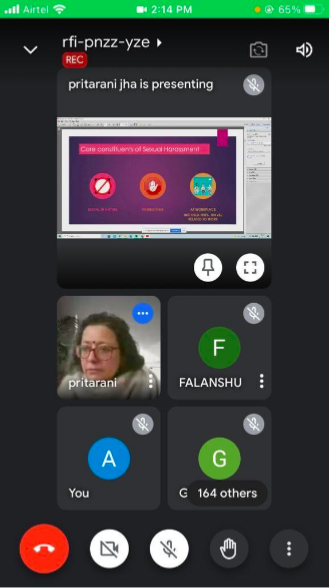
POSH Training for IIIT Vadodara Prita Jha conducted a training on POSH and laws on gender-based violence against women as a part of an orientation program for the students of the Indian Institute of Information Technology, Vadodara (Gandhinagar Campus). The program was held with an aim to sensitize the students on these particular issues. The training was attended by a total of 112 students. Prita Ma’am is a member of the external committee of the institution. This committee has been formed under the POSH Act.